In 1837, at a séance table in upstate New York or a parlor in London, painting was used as a form of existential connection. The spiritualist painters such as Georgiana Houghton with her “spirit drawings,” or Hilma af Klint taking dictation from the unseen, believed painting could also be a medium (pun unavoidable) for talking to the dead. It was a quintessential American impulse even when practiced abroad: part faith, part showbiz, staged in the same parlors and theaters as vaudeville, promising that the past remains in conversation with the present.
Artist Keith Mayerson has used instead the term “method acting” to describe his approach to painting, but listen to him describe his process with playlists built from his family’s eight-track tapes, the energies he “sutures into,” his mother’s spirit arriving at the easel, and one can almost hear the Fox Sisters tapping out their approval.
Since 2001, when Mayerson watched the towers fall with his NYU students from Washington Square Park, he has been painting “My American Dream”: a sprawling oeuvre of hundreds of canvases of Snoopy, John Denver, civil rights heroes, family snapshots. The project poses an ongoing act of connection with an America he insists, against considerable evidence, is still alive.
This month, Mayerson returns home. Colorado Currents, opening at MCA Denver on July 24 includes three bodies of his work, among them a family salon wall honoring his mother, Lois, who passed away last November. “I’m not the Hollywood Medium or anything like that,” he told me from his easel in Riverside, “but sometimes I do feel like she’s kind of coming to me as I’m painting.”
Keith Mayerson as Interviewed by Rachel Dalamangas
How did growing up in Colorado shape you creatively and as an artist?
Growing up in Colorado, I think it was really about the environment and that spirit that really inspired me, and that people were very accepting. There was no pretension, I don’t think, in Denver or Colorado.
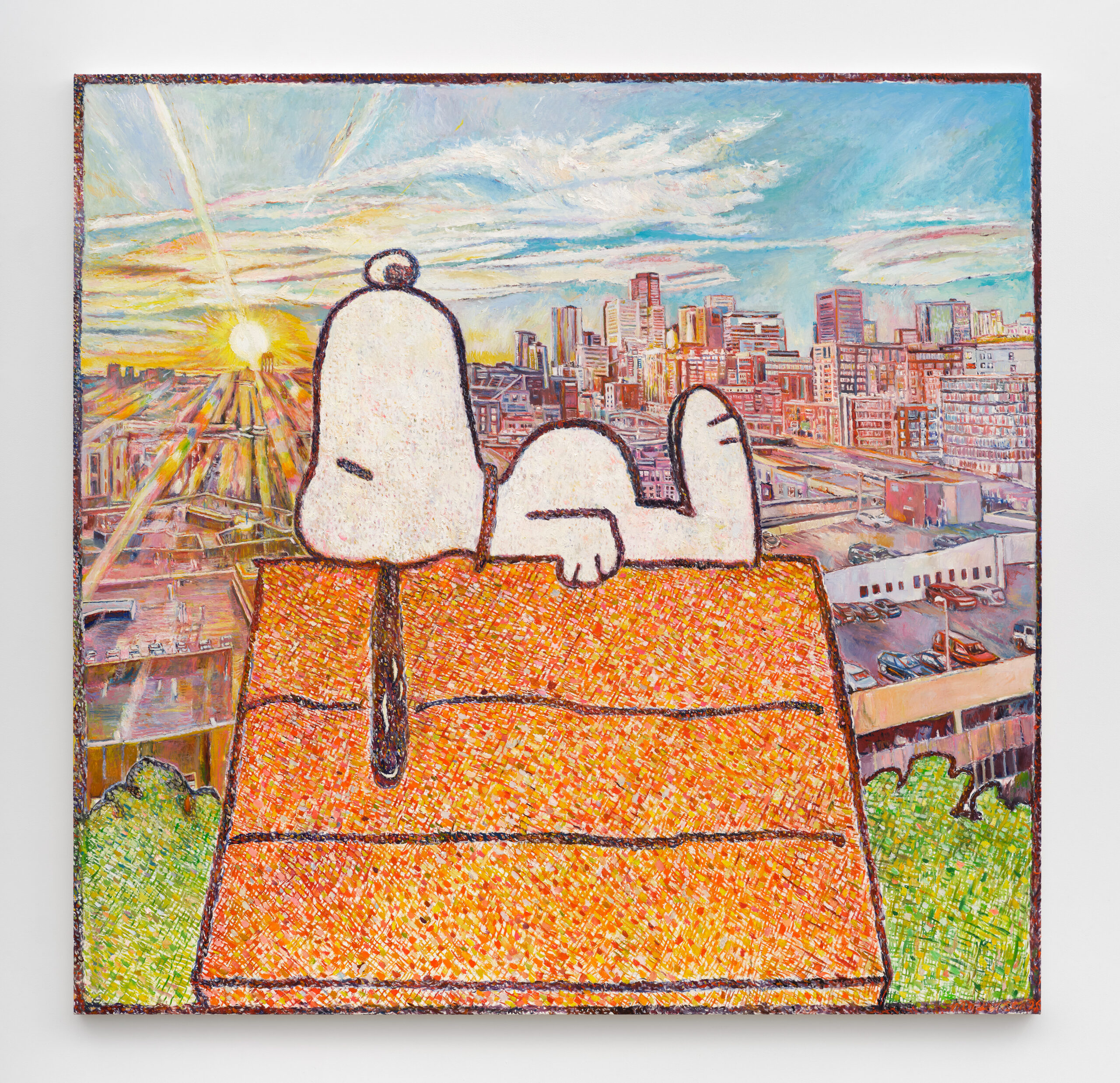
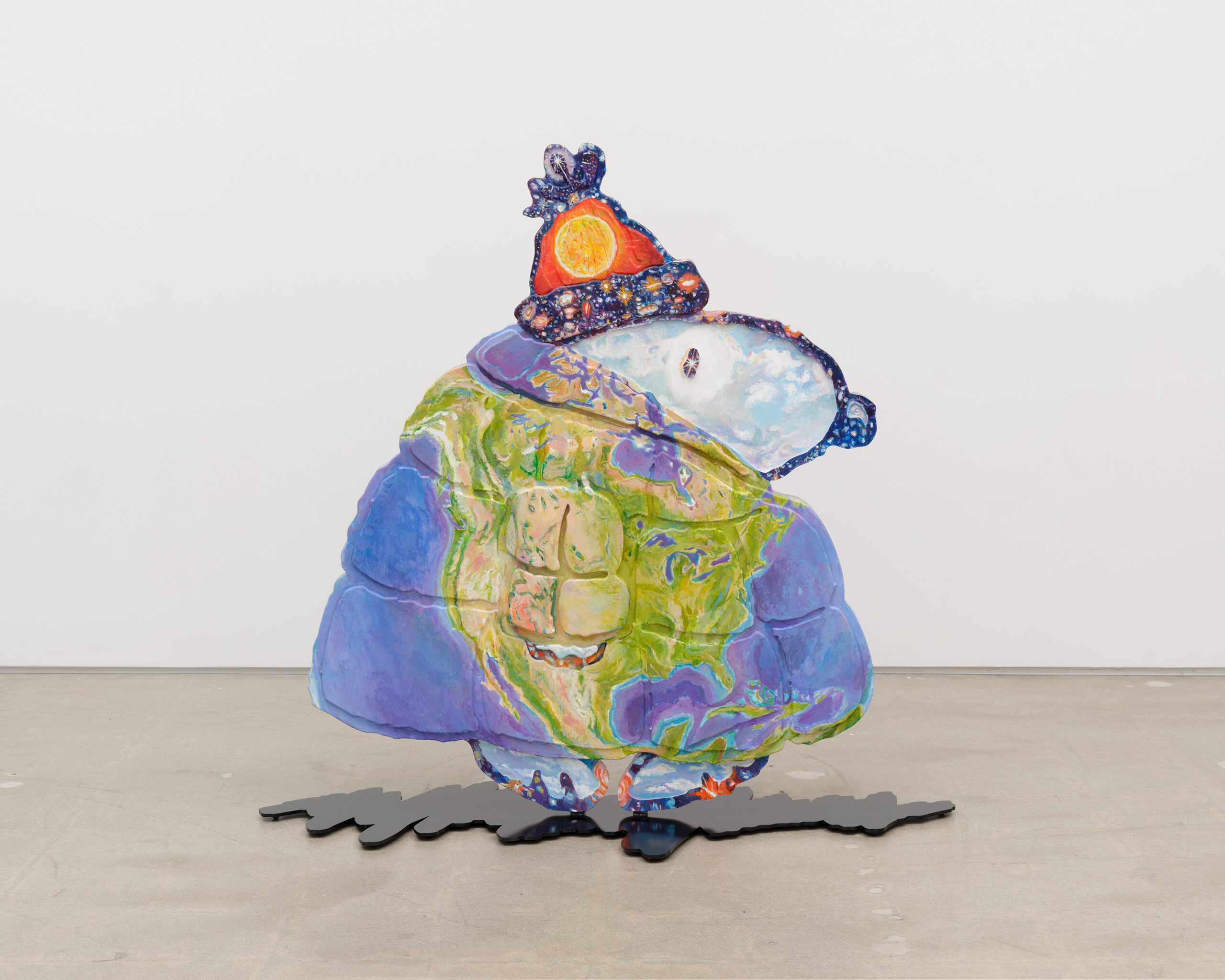
For the MCA Denver Colorado Currents show, I have a few bodies of work that I’m grateful to have included. There will be a large 72 x 70″ painting of Snoopy on his doghouse, “Snoopy Dawn over Denver,” with a background view of the sunrise from my parents’ downtown Denver condo; my first-ever sculpture, “Earth Snoopy”; and a family wall of salon images based on the “Rogues Wall” salon of photos my folks had in their bedroom.
My mom sadly passed away last November, and the salon is to honor her and to celebrate growing up in Colorado. A few of these paintings (and the Snoopy sculpture!) are from the solo show I had at the Aspen Art Museum this past spring, entitled “My American Dream: Rocky Mountain High.”
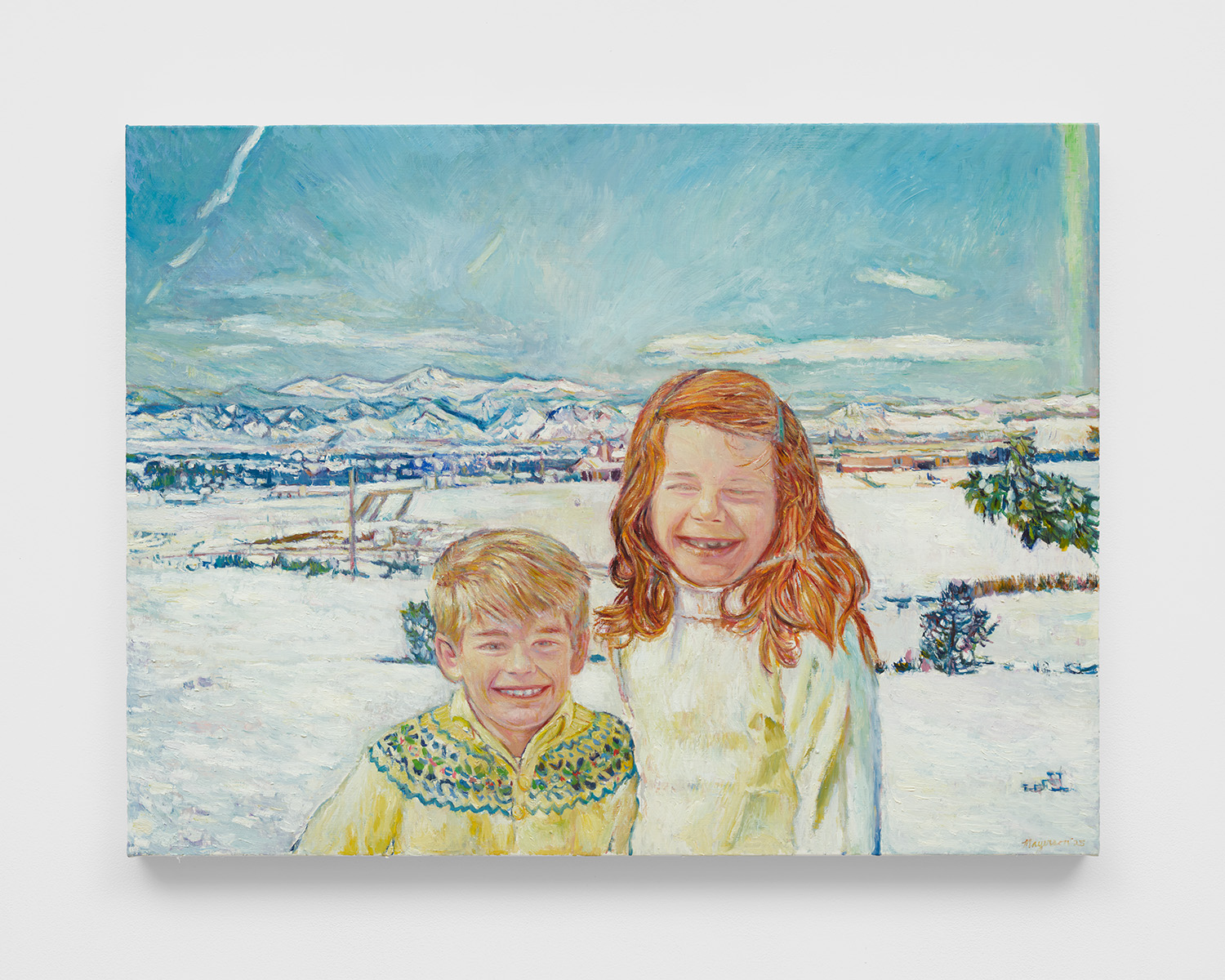
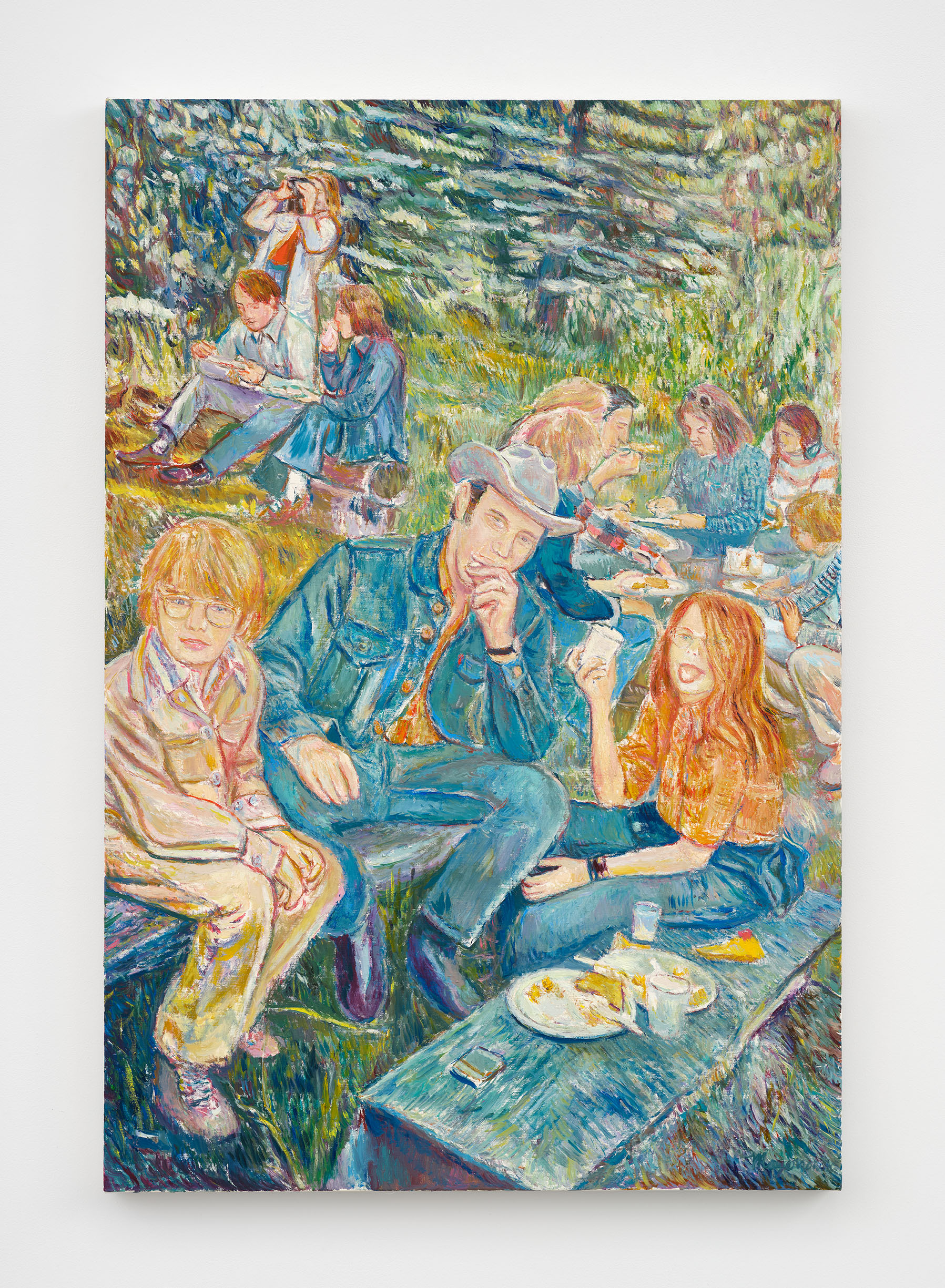
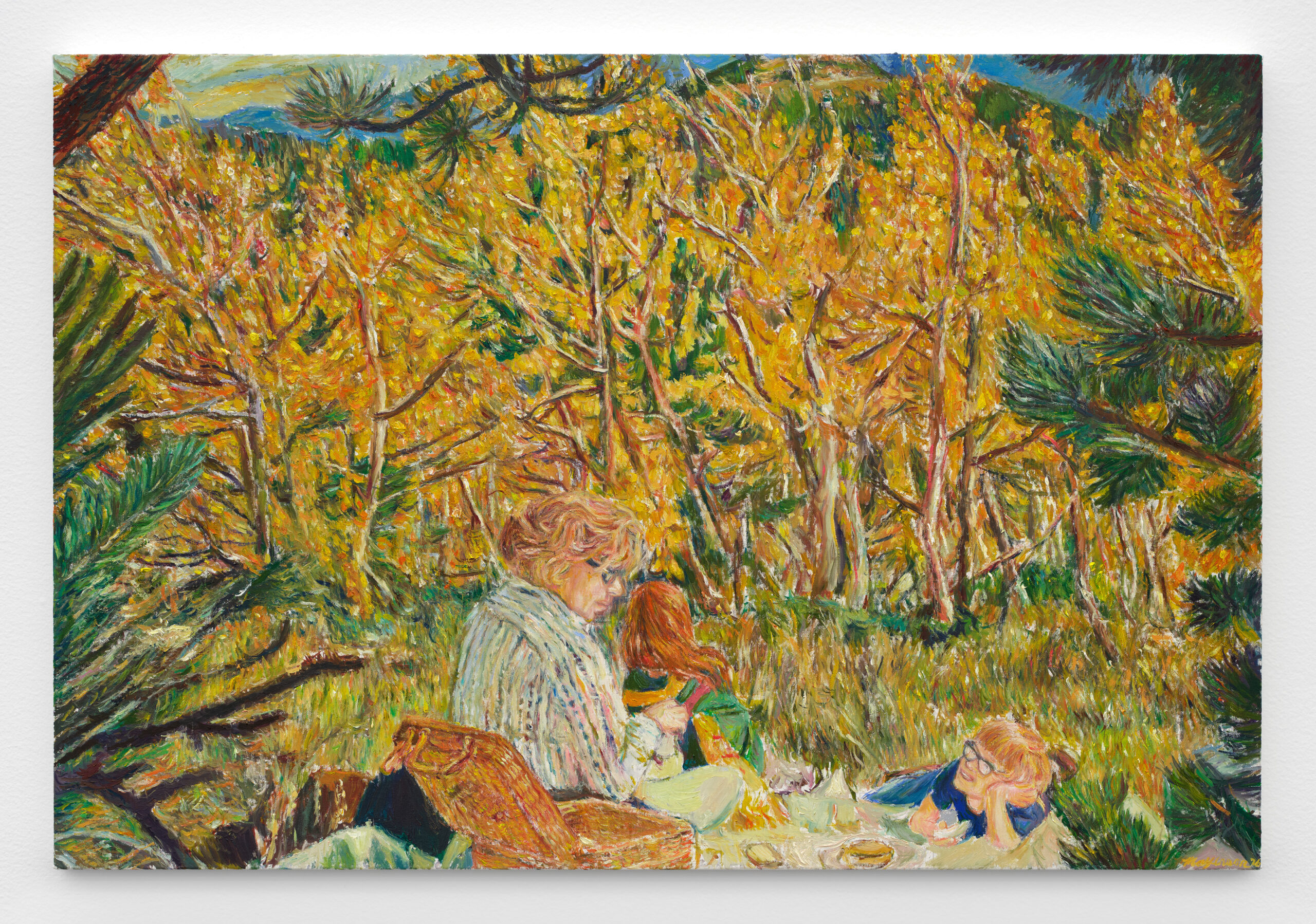
For the Family Salon, one is a painting of us having a picnic—my mom, my sister, and I—in Central City, from a photo taken by my dad. Weirdly, it was at the old cemetery that was there, but they had these beautiful aspen trees, and it was a favorite place for picnics for many folks. Also included is “Rocky Mountain Babies,” a picture of my sister and me from where we grew up in Greenwood Village, in the suburbs of Denver. Behind us, you can see the Rocky Mountains and West Middle School, where I used to walk through the snowy fields to get to school (which are now a whole bunch of houses and fences).
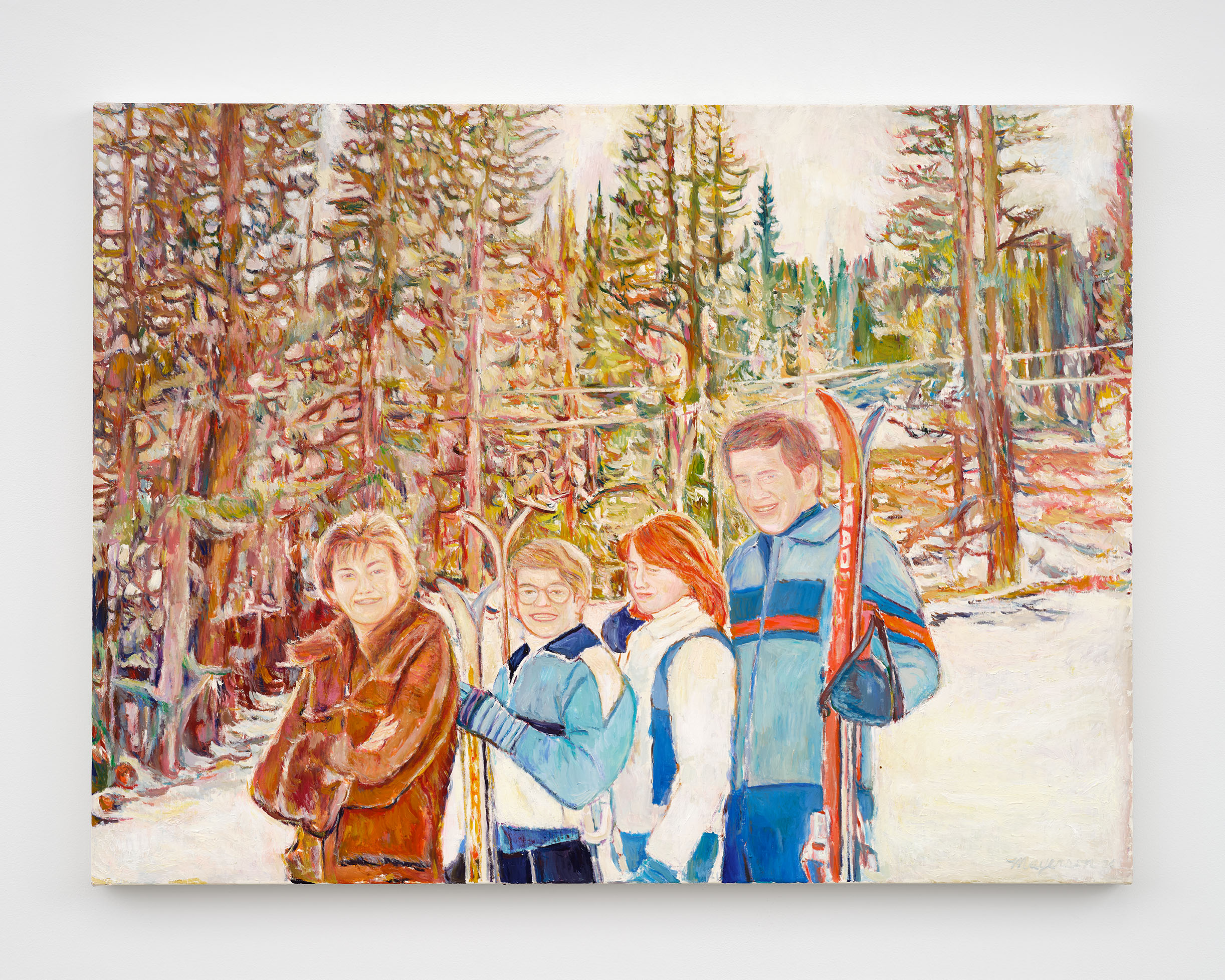
Also for the salon, I’m doing a different version of a 1977 Christmas card photo that was at the Aspen Art Museum. For the AAM, I painted an outtake from this humble shoot (my fellow 11-year-old friend Craig Young took the pictures for us!). In the AAM version, it was on the bunny hill at Copper Mountain where, as a group meeting post, there was a Cherokee sign in the background. Even in the ’70s, they were trying to be a little PC by having it be not for Indigenous people but conflated instead with the Cherokee station wagon. We decided that was just too edgy for the MCA Denver, so I created a new painting of the actual image we used for the Christmas card instead.
At the MCA Denver, I’m going to show the “Earth Snoopy” sculpture, and on the front of the sculpture is a picture of the sun in his hat and North America on his puffy jacket, and on the other side is a picture of the moon in his hat and Russia in the East. Hopefully, our world isn’t flat anymore, but this shows the West that is in constant conflict with the East, while we are all of the same Earth, and it’s obvious that the world has been turned upside down.
“Snoopy Dawn over Denver” is a painting I did exclusively for the show, and it’s Snoopy on his doghouse with a dawn over Denver in the background. This was actually from the guest room balcony at my parents’ condo at the Flower Mill Lofts, just five minutes away from the MCA Denver.
I was there to take care of Dad after Mom had passed, and I woke up really early, and this beautiful sunrise was happening right over the baseball stadium, and you can see downtown Denver behind us. My dad was Jewish, my mom was Southern Baptist, so I’m sort of a religious mutt, but I’m spiritual, and I feel like this was almost like my mom coming from the celestial heavens to tell me everything was okay . . .
I’m also from Colorado. I grew up in Littleton. I was looking at your paintings before this conversation and I thought he really gets Colorado color, you know, like that kind of clear bright sunlight that Colorado gets.
Unfortunately, with global warming, I feel like the sun’s beaming even harder in the mountains when you’re skiing. The atmosphere feels thinner than it used to be. But there’s nothing that presses my buttons more than being in the mountains, or even being in Denver, and being in that atmosphere and just feeling the cool air and that bright sky, and I’m so grateful that you said that.
Where did you go to high school?
I went to Cherry Creek. Everybody hated Creekers because we had one of the biggest schools, and so we had the best football team because we had so many kids to choose from!
 I went to Heritage High School, which was where one of the South Park guys, Matt Stone, I think, went there too. I mean I was a little kid when he was there but he’s a fellow alumnus.
I was talking to Miranda Lash, the curator of the MCA Denver show. We had a nice talk after the LA Frieze fair and about Colorado artists and people from Colorado who are involved in the arts and there’s too few, but there are some. You know, John Currin was from Boulder . . .
It’s interesting how we migrate out of Colorado and spread the word. One of my first jobs after college I was at the Robert Miller Gallery back in 1989 and I worked the front desk and gallerists Cheim & Read were the directors. They showed Kusama, and Joan Mitchell when I was there. They showed Alice Neel, and my heroes Mapplethorpe and Basquiat right after they died. I worked the front desk wearing my grandfather’s three-piece suits and they said, “Keith, you don’t have to be so nice to everybody.” I’m like, “But I’m from Colorado. We’re just nice people. We’re warm and open and affable. We can’t help it!” I like to think that I’ve maintained that attitude my entire career and my life.
 Did you know that Colorado also often gets rated as having the most attractive people because of how athletic everybody is. And so how I explain Coloradans out in the wild is that we are a very friendly and attractive, but poorly dressed people. Do not dress up. People will wonder what is going on with you.
But I mean, what a period in America to be an artist, and to have an art career in which you’re resisting cynicism, right? Have you ever had a period where your sincerity was tested?
I think it is that I don’t want to immerse myself in, you know, gay, homophobic kinds of feelings of repression or whatever. It is kind of interesting because I think, at least for my personal story as a gay man making the pictures that I do, sometimes people question the intent of the works, especially if they see them in reproduction. I actually make serious paintings about Kermit the Frog and the Peanuts gang that sometimes take a moment for folks to realize aren’t ironic!
Seeing a painting in person is never the same as seeing a digital reproduction. And hopefully the painterliness of a painting, how you could see brush strokes and maybe the tenderness of how it’s been painted which helps for the total integrity of the work to come through.
I’ve been creating this whole body of work called “My American Dream” since 2000, when I saw 9/11 happen. I had these nightmares of people jumping and falling from the World Trade Center, so I finally painted the scene of the second plane almost crashing into the building. My friends were like, “You know, you can never show this painting, right?” I’m like, “Yeah, I don’t want to show it.” “You can never sell this painting, right?” I’m like, “Yeah, I would never want to sell it.” But it ended up being at the Whitney, which I’m very proud of. I was doing it because I had to get the nightmares out and to record that historical event.
 The way you speak about your process reminds me of spiritualist painting, which is very American, has a lot to do with Americana and showbiz and all those things, too. The thing about how you’re sitting in conversation with something and you’re connecting to it; can you tell me more about that?
I did theater, and I wrote and directed plays and acted when I was at Brown. But later, I realized that I was more interested in rendering things.
Like a method actor, I really love the idea that in the meditation of something, you could channel the entities that you’re working with, or suture into the avatars of the characters that you’re portraying, or at least honor them to help bring their spirit and worlds to life.
After my mom died, I was doing a lot of these personal works from my own photos of landscapes, but also, of course, my family, and I was playing a lot of her favorite music, some of which happened to be Ella Fitzgerald. So I’ve been listening to a lot of Ella, whom I love. And with the painting I’m doing right now of our Colorado ski family, I made a playlist of all of our eight-track tapes. I have John Denver, the “Cabaret” soundtrack, the “Fiddler on the Roof” soundtrack, Simon & Garfunkel, and some of their favorite music, like Ella, playing when I paint. As it shuffles songs, I’m really thinking about my past and who I was then and who I am now, but also trying to get into that place of what it was like to be alive in 1977 and what those feelings were like . . .
Then, with my mom passing . . . I’m not the Hollywood Medium or anything like that, but channeling a little bit of my mom—in a good way and not in a serious spiritual way—where I’m really feeling like I’m channeling her, but, um, sort of feeling her spirit, and sometimes I do feel like she’s kind of coming to me as I’m painting.
I love Cézanne, but also the American Transcendental spirit, and Marsden Hartley, Charles Burchfield, Arthur Dove, and that first wave of American modernism—O’Keeffe and more—where they really are going back into nature and, in a non-denominational way, trying to find the spirit in that nature. Not trying to make things look real like a photo but trying to imbue the essence of what they’re seeing and the nature that flows through everything.
For me, I’m trying to extrapolate not just the dot matrix of what I’m looking at from my photos I printed out with my computer but trying to think about my thoughts. And as things become more abstract, especially painting nature, when you’re painting all those leaves or all those landscapes, it’s incredibly difficult to individuate those essential elements, but your mind’s making up stuff, and I think projecting an unconscious world onto it.
My epiphany about postmodernity is about agency being reified into Capital, like flour and pizza dough through the capitalist machine, and I think that’s definitely what happened to poor Elvis and Marilyn, and what Warhol successfully did with his imagery in the time that it was important to acknowledge this. But I think in the era post-Warhol, post-Richter, my job is to penetrate the surface of the photo, and, like Bonnard and Vuillard and the beginning of painters using photography as source material, to dive into the world that is portrayed in the photo and bring it to life on the canvas.
I think that’s just so important as an artist in the 21st century, not just being able to take care of your stuff, of the business of art, but to be able to make work in the world and have it exist without taking away the spirit or the soul of what it is that you were creating.
Another text I love to read to teach is Roland Barthes’ “The Third Meaning,” where, looking at Eisenstein film stills, he explains that the first meaning is literally what’s going on in the image. The second meaning is symbolically what the artist might have been intending. But the third meaning is sort of this vertical response of emotion and feelings—taking the work that an artist might create and just projecting it into your own life in a way that the artist would never even understand. Like, “Oh, this reminds me of my grandmother,” or “This is like when I was having that picnic in the park when I was five with my parents.”
For me, the third meaning is the thing that really makes a work of art, especially fine art, have a life of its own.
Hopefully, if we’re thinking our thoughts while making art, figuring out the puzzles in our mind’s eye about what the talisman of the image might be about, as we’re solving the puzzle of the composition in front of us, we might be solving the puzzles in our mind, and we “wake up” from our rendering with epiphanies and great art. I always say that art’s not necessarily therapy, but I think everybody’s working something out, even intellectually.
Right. It’s a statement that art does not have to be just a vehicle for someone else’s wealth that they’ve run out of places to stuff.
So, if I want to access my unconsciousness through painting, what do I do?
Well, first I always say, make something that’s meaningful. Like, why else do anything? As long as you care about it. Create a playlist for yourself that is about the image that you’re painting.
As you’re painting and allowing yourself to be free and in the flow of creation, hopefully learning the tools of your trade, being able to have access to your practice in a way that you aren’t thinking about technical things, then it can be a very liberating feeling.
Growing up skiing in Colorado, I really think that painting, for me, is a lot like skiing. You’re listening to music, and your body’s kind of doing things automatically. When you’re skiing, if you’re a good skier, you’re just having fun cruising down the slope and thinking your thoughts, and your mind is in one place, your body is in sort of another place, but you’re united, where your body is doing this action that makes you feel good. And when I’m carving turns with my brush, it feels very much like I’m carving turns when I was skiing, and then something extra can come out, like that extra thing that you can’t control: your unconscious thoughts, your emotions, your feelings, the painterliness of something that hopefully makes a work have a life of its own that extends beyond you to help enlighten the world.
Rachel Dalamangas
July 2026
New York, New York
Images (top to bottom):
“Snoopy Dawn over Denver,” 2026, Oil on linen, 70 x 72 in
“Rocky Mountain Babies (My Sister And I),” 2025, Oil on linen, 24¼ × 32 in
“Earth Snoopy,” 2026, Acrylic on wood and steel, 48 × 49 × 18 in
“Estes Park Picnic, August, 1975,” 2026; Oil on linen, 40 x 27 in
“Picnic in the Aspen Grove with Mom, at the Old Cemetery in Central City, CO, Fall 1972,” Oil on linen, 2025
“The Mayerson Family Ski Clan, Copper Mountain, 1977,” 2026, Oil on linen, 30 x 45 in
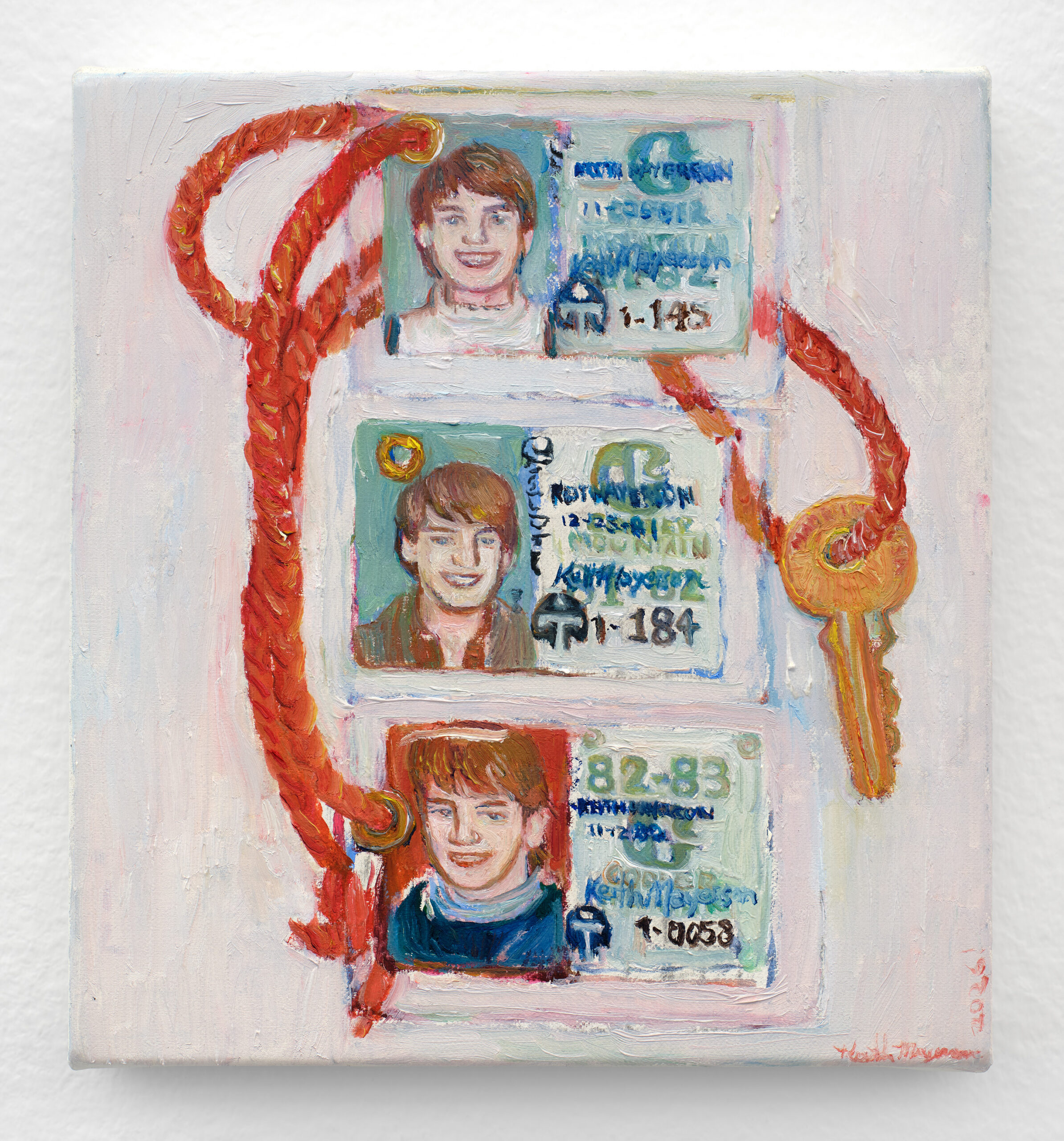
“Copper Mountain Ski Passes, 1981-83 (from when the artist was ages 15–16),” 2026, Oil on linen, 7½ × 7 in
All images courtesy of the artist and KARMA Gallery.
Colorado Currents curated by Miranda Lash, Ellen Bruss, and Leilani Lynch at MCA Denver will feature 28 Colorado artists, on view July 24-Nov 1, 2026.
Correction: an earlier posted version of this article mis-stated the number of works currently in “My American Dream” as 140. As of July 2026, that figure is actually in the hundreds. zing regrets the error.